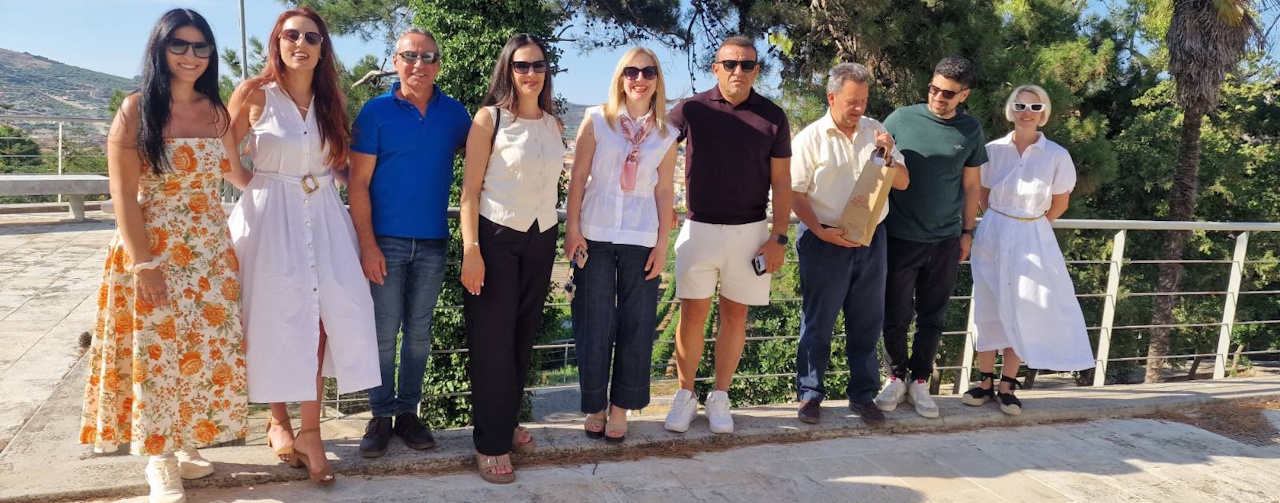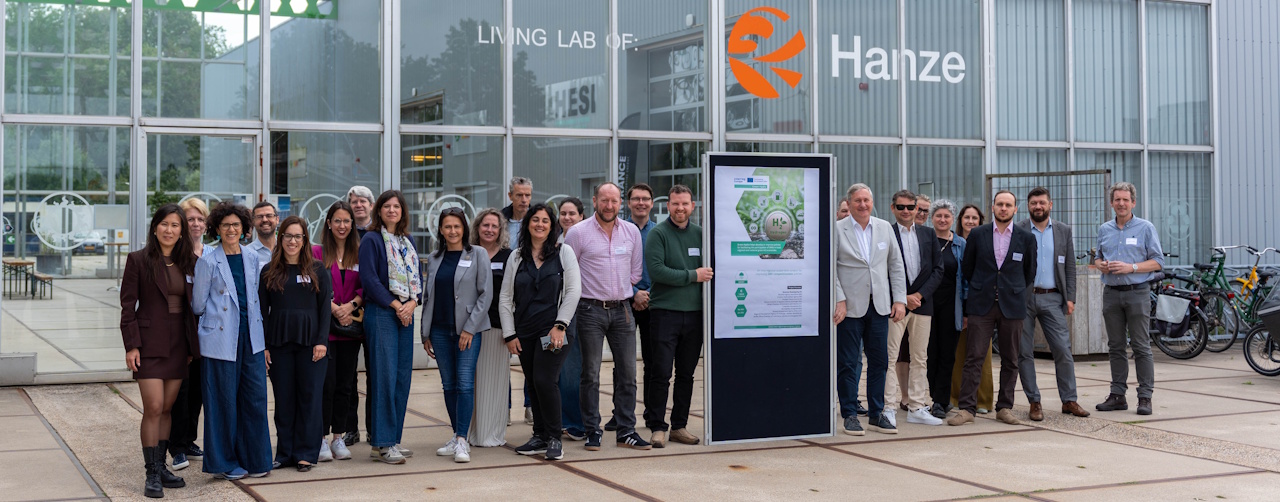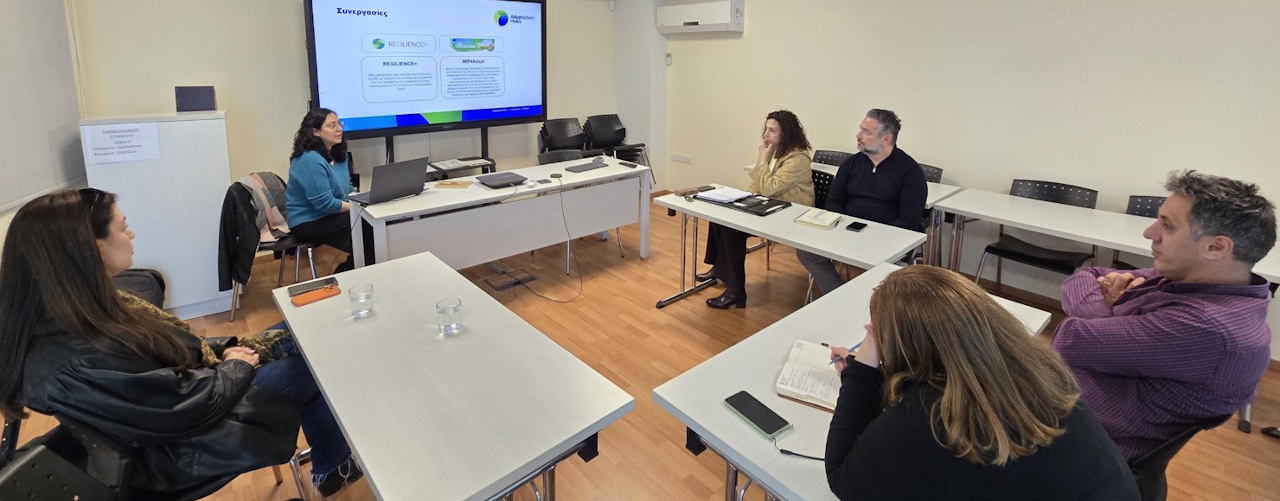
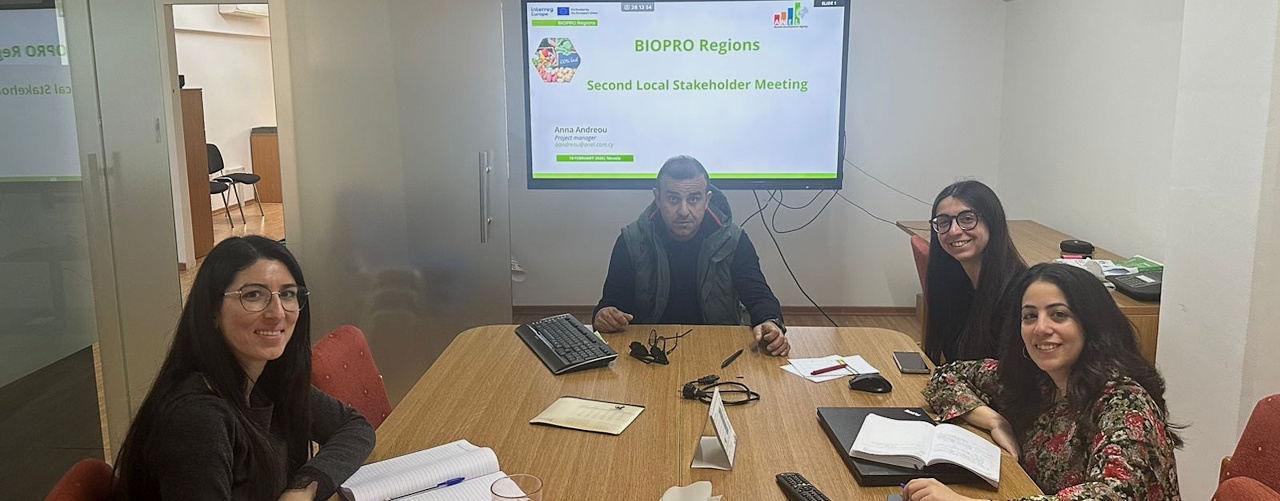
ANEL hosted the second Local Stakeholders’ Group Meeting for the BIOPRO REGIONS project on 19 February 2026 at the Department of Environment in Cyprus. The meeting opened with a warm welcome and contextual remarks outlining the purpose of bringing together local public stakeholders to collaborate on strengthening sustainable, local agri-food chains in line with the project’s objectives. Participants introduced themselves, shared their roles and highlighted their professional experiences, especially in areas relevant to sustainable food systems, public governance and European project implementation.
The agenda then moved to a detailed overview of the BIOPRO Regions project, explaining that the initiative aims to enhance local and regional capacity to support sustainable food production, consumption, processing and distribution by exchanging good practices and collaborative learning among European territories. During the discussion on the Department of Environment’s role, it was emphasized that the Department is a key stakeholder from the application phase onward and plays an important part in aligning local policy instruments with the ambitions of BIOPRO Regions project. The Department’s capacity to support sustainable production and consumption — including policy formulation, regulatory capabilities, and engagement with local producers — was discussed as a way to facilitate synergies between national sustainable food priorities and project activities. The conversation also identified opportunities for future collaboration, such as incorporating project insights into Cyprus’ strategic frameworks for organic farming, local value chains and circular bioeconomy development.
One of the main sessions focused on insights from international partners, drawing on examples of good practices published on the BIOPRO Regions project website. Among these were initiatives supporting start-ups and entrepreneurship in rural food production, where small grants have helped young rural entrepreneurs boost agro-processing capacity and strengthen local food production, thereby encouraging job creation and vitality in rural areas. Another example highlighted was the “Regional Brand Bačka” in Serbia, a unified local label that promotes small rural producers and supports sustainable production through stronger regional branding and marketing, showcasing how territorial identity can be leveraged to stimulate local markets and consumer awareness.
The meeting then turned to best practices from Cyprus, including the Food Connect platform, which enables food businesses to donate surplus food to charities and social organisations. This helps reduce food waste, supports people in need and strengthens collaboration between businesses, civil society and public authorities for more sustainable food systems. The Department of the State General Laboratory’s traceability platform was also discussed as a valuable tool for ensuring transparency and quality in local agri-food supply chains, providing a useful reference point for producers and policymakers seeking to improve governance and market trust. These local examples showed how BIOPRO Regions project goals are relevant in Cyprus and highlighted opportunities to expand pilot actions and include them in regional policies.
Attention was also given to the upcoming partners’ meeting in Hungary scheduled for April 2026. The draft agenda and preparatory tasks were reviewed, with emphasis on clarifying objectives and expected deliverables. The meeting concluded with a synthesis of key discussion points, reinforcing the importance of cross-regional learning, the active involvement of local public stakeholders in policy adaptation and the value of combining international examples with Cyprus’ own emerging sustainable food initiatives. Participants agreed on the next steps to share knowledge, implement actions locally and stay involved in BIOPRO Regions activities to help make Cyprus’ local food systems stronger and more sustainable.